Susitna River Coalition


Updated Definition of
"Waters of the United States"
90 Fed. Reg. 52498
Public Comments Due: January 5, 2026
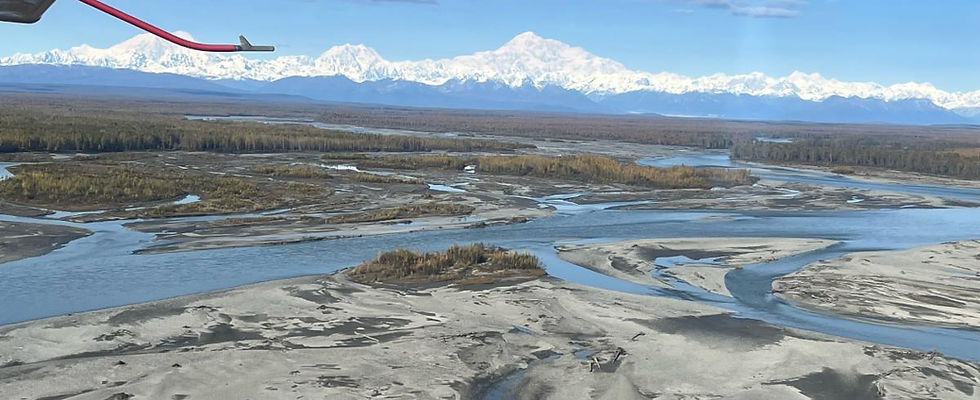
Because Alaska holds roughly 60% of the nation’s wetlands and 40% of its connected waterways, changes to how “waters” are defined here have outsized consequences.The Waters of the United States rule determines which wetlands and waterways receive federal protections under the Clean Water Act. There is a proposal to very narrowly define WOTUS to exclude protections for millions of acres of waterways that currently receive protection.In Alaska, this affects everything from salmon habitat and seasonal wetlands to flood control, drinking water, and development practices near rivers and lakes. Changes to how “waters” are defined can expand or narrow protections in ways that ripple across entire watersheds.
On November 20, 2025, the EPA opened up a comment period on proposed changes to the definition of WOTUS. The proposed changes are sweeping, and intended to align federal regulations with recent court decisions, with a comment period deadline of January 5, 2026
The current proposal would narrow the definition of WOTUS, potentially excluding federal protections for millions of acres of waterways that are currently regulated. Because Alaska holds roughly 60% of the nation’s wetlands and approximately 40% of its connected waterways, changes to how “waters” are defined here have outsized national consequences. In Alaska, WOTUS affects everything from salmon habitat and seasonal wetlands to flood control, drinking water, and development practices near rivers and lakes. Even small definitional changes can expand or narrow protections in ways that ripple across entire watersheds.
For example, the proposed West Susitna Access Road would cross extensive wetland complexes and numerous streams that play a central role in Susitna Basin hydrology and fisheries productivity. How WOTUS is defined directly determines the scope of federal review, permitting requirements, and mitigation obligations for this project.
In a recent Section 404 permit application for the West Susitna Access Road, more than 2,700 acres—approximately 97% of mapped wetlands—were deemed non-jurisdictional under a rigid standard that considered only permanently flooded wetlands that are indistinguishable from adjacent waters. This determination excluded wetlands despite clear evidence of seasonal surface flows, subsurface hydrologic connectivity, and functional links to downstream salmon-bearing streams.
The wetlands excluded from federal jurisdiction support critical spawning and rearing habitat for salmon populations that underpin Alaska’s commercial, subsistence, and recreational fisheries. Omitting these wetlands from federal protection lacks a scientific basis and conflicts with the core objectives of the Clean Water Act to maintain the integrity of the nation’s waters.
The Susitna River Coalition's work is informed by scientific research, lived experience navigating permitting systems in Alaska, and a network that includes hydrologists, fisheries biologists, and community-based stewards familiar with the structure and function of Arctic and subarctic wetland systems.Public comments are one of the few chances to anchor this rule in how water actually behaves on the ground, how it spreads, freezes, connects, floods, drains, and reappears across seasons, and why upstream and seasonal waters matter far beyond their footprints.
Read SRC's official comments on WOTUS below